10 Easy Chair Yoga Poses for Seniors with Limited Mobility
If you’re looking for easy chair yoga poses for seniors with limited mobility, the setup matters as much as the stretches. Use a sturdy chair that doesn’t roll, plant both feet flat on the floor, and sit near the front edge so your spine can lengthen without slumping into the backrest. Keep movements small at first. Nothing here should feel jerky, pinchy, or forced. A mild stretch is fine. Sharp pain is not.
Start with pose one: seated mountain. Sit tall, rest your hands on your thighs, relax your shoulders, and imagine the crown of your head lifting gently toward the ceiling. Stay for a few slow breaths. Then move into pose two: seated belly breathing with arm float. Inhale and let your arms drift outward and up only as high as comfortable; exhale and lower them. That simple combo wakes up posture, breathing, and circulation without demanding much from the joints. For many older adults, especially anyone stiff first thing in the morning, this is the difference between “I can’t do yoga” and “Actually, I can do this.”
Loosen a stiff neck and tight shoulders without leaving the chair
Neck and shoulder tension can make the whole body feel older than it is. Pose three is a seated neck stretch. Sit tall, let your right ear tip toward your right shoulder, and keep both shoulders heavy instead of hiking one up. Hold for a few breaths, then switch sides. You’re not trying to yank the neck into submission. Think “soft release,” not “big stretch.” If looking down at phones, books, or puzzles leaves you tight, this one earns its keep fast.
Pose four is seated shoulder rolls, and yes, it counts. Circle both shoulders up, back, and down several times, then reverse the direction. It sounds almost too basic, but basic is often what works. Shoulder rolls help lubricate the joints and ease that hunched, guarded posture that sneaks in over time. If full circles feel awkward, make them smaller. Gentle yoga is supposed to meet you where you are, not where you were ten years ago.
Wake up the spine with seated stretches that don’t feel risky
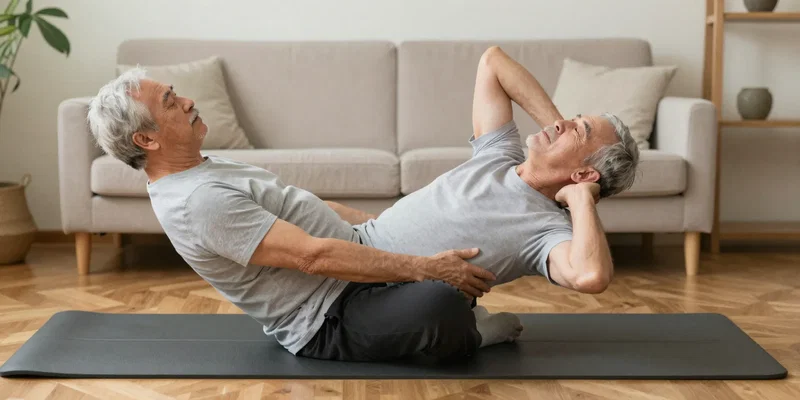
A lot of discomfort in daily life comes from a spine that barely moves. Pose five, seated cat-cow, is one of the safest ways to bring some motion back. Place your hands on your knees. As you inhale, lift your chest and gently arch your back. As you exhale, round the spine and soften your chin toward your chest. Keep it slow. No dramatic movement needed. This is less about making a pretty yoga shape and more about reminding the back that it can still bend and extend a little without complaint.
Pose six is a gentle seated twist. Sit tall, place one hand on the opposite thigh and the other on the chair seat or back, then rotate your chest slightly to one side. Slightly is the key word. Twisting should come from the upper back and ribs, not from wrenching the knees or cranking the neck. Hold for a breath or two and repeat on the other side. For seniors with limited mobility, this kind of controlled rotation can help with everyday things like turning to reach a side table or checking behind you without feeling stuck.
Give hips, knees, and ankles a little kindness so standing and walking feel easier
Lower-body stiffness often shows up as trouble standing up, shuffling steps, or feeling unsteady after sitting too long. Pose seven is a seated figure-four variation, but keep it modest. Cross one ankle over the opposite shin or, if that’s comfortable, over the opposite knee. Sit tall and hinge forward just a little until you feel the outer hip stretch. If crossing that high doesn’t work for your knees, stay with the lower version. No points for ambition here. The goal is to gently open the hips, not irritate them.
Pose eight is seated ankle circles and toe-heel lifts. Extend one foot slightly forward, circle the ankle several times each way, then alternate lifting the toes and pressing them down while lifting the heel. Repeat on the other side. These tiny seated stretches help more than people expect. Ankles matter for balance. Feet matter for confidence. When they get stiff, everything upstream pays for it. This is especially useful for anyone who spends long periods sitting, has mild swelling, or feels wobbly when first getting up.
Use gentle seated work to build more reach, balance, and everyday confidence
Pose nine is a seated side bend. Raise one arm if that’s comfortable, or keep your hand at your hip, then lean slightly to the opposite side without collapsing forward. Think of creating space along the ribs and waist. Breathe there for a moment, then switch sides. This is a smart stretch for people who feel tight through the sides of the torso or struggle with reaching into cabinets, putting on a coat, or simply sitting upright without feeling compressed.
Pose ten is the seated knee lift. Hold the sides of the chair lightly, sit tall, and lift one knee a few inches, then lower it with control. Alternate sides. If that’s too much, slide the foot forward and back instead. This looks simple because it is simple, and that’s exactly why it works. It gently wakes up the hip flexors and abdominal muscles that help with stepping, repositioning in bed, and getting in and out of a car. Among easy chair yoga poses, this one often feels the most “functional” because the payoff shows up in ordinary life almost immediately.
How to make chair yoga a habit when energy, pain, or patience are limited
The best routine is the one you’ll do without negotiating with yourself for twenty minutes first. Pick four or five of these poses and run through them for five to ten minutes. That’s enough. Seated mountain, belly breathing, shoulder rolls, cat-cow, ankle circles, and a side bend make a solid short session. On stiffer days, keep the range of motion tiny. On better days, stay a little longer in each shape. Consistency beats intensity every time, especially with gentle yoga.
A few practical rules help. Breathe normally; don’t hold your breath while concentrating. Move slower than you think you need to. If one side is much tighter, that’s normal, not a problem to solve in one session. And if you feel dizzy, short of breath, or unstable, stop and reset. Chair yoga for seniors with limited mobility should leave you feeling looser, warmer, and a bit more upright, not wrung out. Done that way, these seated stretches become less of a “workout” and more of a reliable tool for getting through the day with less stiffness and more ease.