Online Chair Yoga Classes for Seniors: What to Look For Before You Join
If you’re comparing online chair yoga classes, the first thing to check is the person teaching them. Not the monthly fee. Not the music. Not the branding. A good class for older adults rises or falls on the instructor’s judgment. You want someone who clearly understands aging bodies, common mobility limits, balance concerns, joint sensitivity, and the difference between gentle challenge and reckless pacing. A polished fitness personality is not automatically the right fit.
Look for specifics in the instructor bio. Have they worked with seniors, adaptive movement, rehab settings, or therapeutic exercise? Do they explain how they modify poses for arthritis, osteoporosis, hip replacements, or limited shoulder range? That matters. The best chair yoga instructor usually gives calm, concrete directions, demonstrates options, and never assumes everyone can twist, reach, or stand up smoothly. Watch for teaching style too. If their sample videos feel rushed, vague, or overly performative, move on. You need somebody who cues well enough that a person at home can follow safely without feeling lost two minutes in.
Make Sure the Class Is Actually Built for Seniors
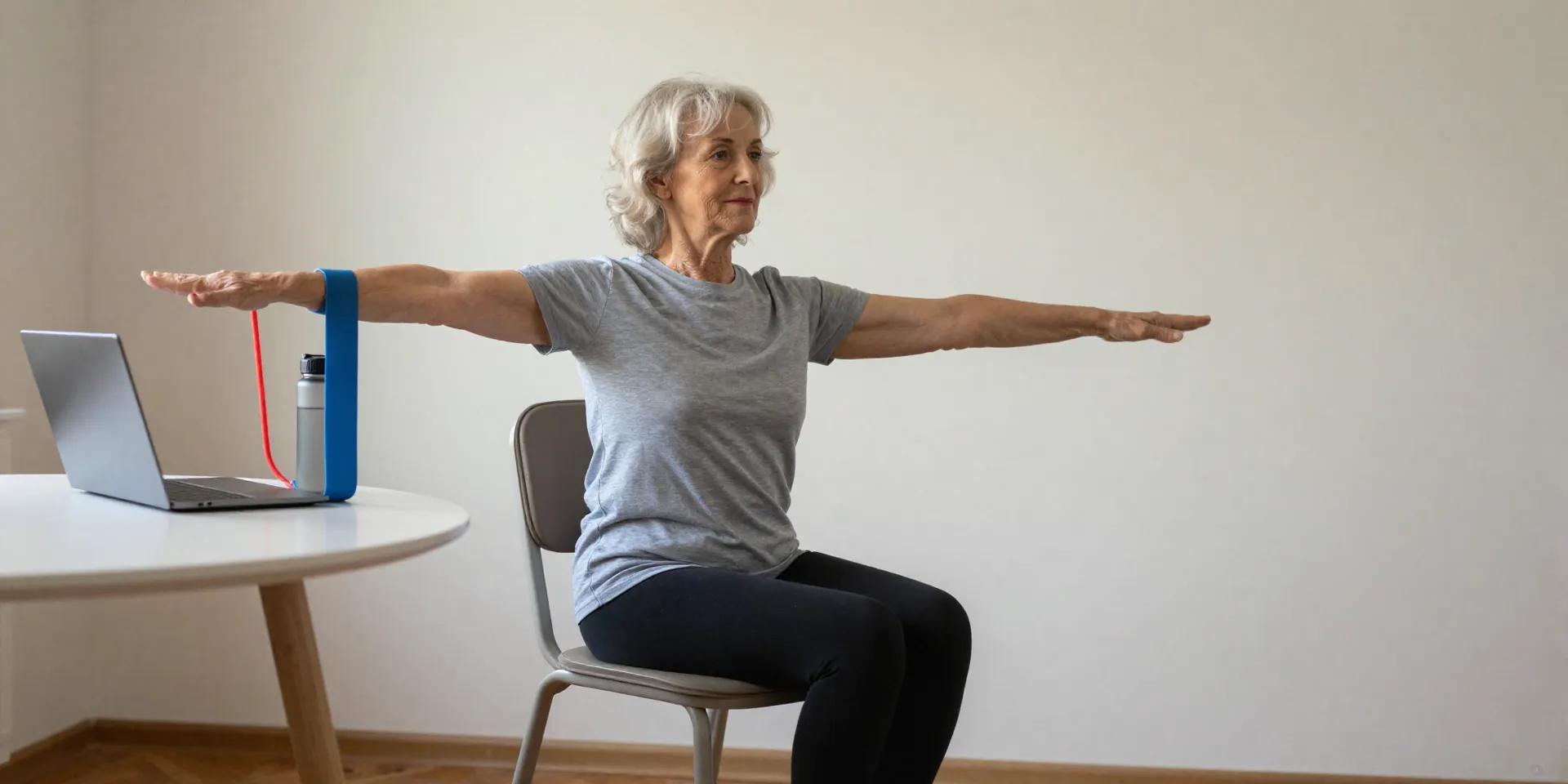
Plenty of programs use the word “gentle” when they really mean “slower than boot camp.” That’s not the same as being appropriate for seniors virtual fitness. A class made for older adults should be structured around stability, mobility, breathing, posture, circulation, and everyday function. Think easier reaching, smoother getting up from a chair, less stiffness in the neck and hips, better confidence moving around the house. If the session seems built around calorie burn or dramatic flexibility, it’s probably aimed at the wrong audience.
Pay attention to the details in the class description. Does it mention whether standing is optional? Does it explain what kind of chair to use? Does it say how long the class runs and whether breaks are built in? Those aren’t small things. They tell you whether the instructor has thought through the real experience of an older person exercising at home. Bonus points if the class includes balance support, wrist-friendly modifications, and reminders to move within a pain-free range. Good chair yoga is accessible, but it should never feel watered down or careless.
Look for Clear Safety Cues and Real Modifications
Here’s the thing: the safest class is not the one with the easiest-looking poses. It’s the one with the clearest instructions. When you can’t ask for hands-on help, verbal cueing becomes everything. A strong online teacher tells you where your feet go, how tall to sit, when to ease off, what mild effort feels like, and what warning signs mean stop. They also offer choices without making it sound like you’re failing if you take the gentler option.
Before joining, sample a video and listen closely. Does the instructor say things like “keep both feet grounded,” “skip the twist if you’ve had recent back pain,” or “hold the chair if you’re coming to stand”? Good. That’s a teacher thinking ahead. Less reassuring: “just do what feels right” with no further guidance. That sounds flexible, but it often leaves people guessing. The better home exercise videos for seniors are usually plainspoken and specific. They mention breathing without overcomplicating it. They avoid dramatic neck rolls, deep forward folds, or aggressive spinal twists unless they’re giving careful alternatives. Safety should feel baked into the class, not tacked on as a disclaimer.
Check the Tech Experience Before You Commit
A class can be excellent on paper and still be annoying enough that nobody sticks with it. That’s why the practical side matters. Is the platform easy to log into? Are the buttons large and obvious? Can you replay a session without hunting through menus? If the service is aimed at older adults, the tech should feel simple, not like a puzzle. Friction kills consistency fast.
Recorded classes are often a better starting point than live ones, especially for beginners who want to pause, repeat, or try a ten-minute session first. Live classes can be great for routine and connection, but only if the camera angle, audio quality, and sign-up process are reliable. Check whether captions are available, whether the instructor is easy to hear, and whether the video shows full-body demonstrations instead of awkward close-ups. Also look at class length. Many older adults do better with shorter home exercise videos they’ll actually use three times a week than with one ambitious hour-long session they dread. Fancy features don’t matter much if the service is clunky and the class never gets played.
Read Between the Lines in Reviews and Trial Classes
Reviews can help, but only if you know what to look for. Five stars don’t tell you much on their own. Read the comments and scan for useful patterns. Do people mention feeling safer, less stiff, and more confident after a few weeks? Do they say the instructor explains movements clearly and gives modifications without making anyone feel old or fragile? That’s promising. Compliments about “great energy” are nice, but they’re not enough if nobody mentions clarity, pacing, or comfort level.
If there’s a free trial, use it like a test drive. Try one class on a normal day in a normal room with the chair you’d actually use. Notice whether transitions are manageable, whether the pace allows time to reposition, and whether the session leaves you pleasantly worked or strangely aggravated. A good class should feel organized and reassuring, not random. And trust your gut. If the instructor’s tone feels patronizing, too chatty, or weirdly intense, that’s a real issue. Older adults deserve better than being talked down to or pushed too hard in the name of motivation.
Choose a Program You’ll Return to Next Week
The best online chair yoga classes are the ones that fit real life. That sounds obvious, but people often choose based on what seems ideal rather than what’s sustainable. Maybe you want a library of short classes for stiff mornings. Maybe you want one live session each week to stay accountable. Maybe you want a teacher who feels calm and no-nonsense, not spiritual, not gimmicky, just solid. That kind of fit matters more than having endless content.
It also helps to think beyond the first class. Does the program offer variety without becoming chaotic? Are there beginner sessions, mobility-focused options, and classes for specific needs like neck tension or lower-body stiffness? Can you grow with it a little? A good seniors virtual fitness program should make it easy to stay consistent, because consistency is where the benefits show up: easier movement, better posture, less stiffness, a steadier sense of control. If a class feels safe, clear, and manageable enough that you’d willingly press play again tomorrow, you’ve probably found the right one.